White Mulberry Leaf & Carb Absorption: The Ingredient That Works Earlier
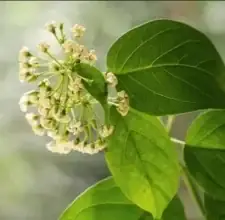
Most ingredients marketed for blood sugar support work on glucose once it's already circulating in the bloodstream. White Mulberry Leaf is one of the few commonly used ingredients that works a step earlier, in the gut itself.
How it's thought to work
White Mulberry Leaf contains a compound called DNJ (1-deoxynojirimycin), studied for its association with slowing carbohydrate breakdown in the digestive tract. In simple terms: it's thought to affect how quickly the carbohydrates you eat get converted into glucose that enters your bloodstream, rather than acting on glucose that's already there.
Why the distinction matters
A formula that pairs a "before absorption" ingredient like White Mulberry Leaf with "after absorption" ingredients like berberine is, at least in principle, addressing two different stages of the same process rather than duplicating one mechanism five times over.
What the evidence actually supports
Research on DNJ and carbohydrate absorption is real but, like most botanical research, comes with the usual caveats: study sizes are often modest, and translating a laboratory or small-trial finding into a guaranteed real-world effect for any specific product isn't something the research alone can promise.
A reasonable takeaway
White Mulberry Leaf's mechanism is genuinely distinct from most other blood-sugar ingredients, which is a reasonable formulation rationale — but "different mechanism" isn't the same as "proven stronger effect," and it's worth holding both facts at once.